When Maya, a software engineer in Austin, Texas, tried to grow heirloom tomatoes on her kitchen countertop, the plants wilted after two weeks. The lights flickered, the soil stayed soggy, and the flavor never developed. She felt the sting of wasted time, money, and hope. This scenario repeats in apartments, dorms, and even office break rooms where aspiring growers battle limited space, inconsistent light, and pest invasions. The frustration builds as dreams of fresh salads and home‑cooked soups fade into disappointment.
📝 Table of Contents
Common Challenges With A Closer Look at indoor vegetable garden (advanced strategies)
Inadequate Light Spectrum and Intensity
Most indoor growers rely on standard LED bulbs or fluorescent tubes that emit a narrow spectrum. Plants quickly show signs of stretching, pale leaves, and stunted roots.
The problem stems from mismatched wavelengths; chlorophyll thrives on blue and red light, while green and far‑red wavelengths support flowering and fruiting. Without a balanced spectrum, photosynthesis stalls, and yields plummet.
Poor Air Circulation and Stagnant Humidity
Closed windows and cramped grow tents trap heat and moisture, creating a micro‑climate ripe for mold and fungal spores. Leaves develop brown edges, and roots suffocate.
This happens because plants exchange gases through stomata, and stagnant air prevents CO₂ from reaching the foliage while trapping excess humidity that fuels pathogens.
Improper Nutrient Management in Soil and Hydroponics
Over‑fertilizing or using the wrong nutrient ratio leads to nutrient lockout, leaf burn, and weak stems. Under‑feeding causes chlorosis and poor fruit set.
These issues arise when growers apply generic fertilizer schedules without accounting for the specific needs of each vegetable, growth stage, or growing medium.
Space Constraints and Root‑Bound Plants
Apartment balconies and kitchen countertops limit container size, causing roots to circle and restrict nutrient uptake. Plants become leggy and produce fewer vegetables.
The underlying cause is the lack of a proper root zone; when roots cannot expand, they encounter physical barriers that trigger stress hormones, halting growth.
Pest and Disease Outbreaks in Confined Environments
Aphids, spider mites, and powdery mildew can spread rapidly in indoor setups, especially when sanitation is overlooked. Crops can be lost within days.
These infestations thrive because indoor ecosystems lack natural predators, and the warm, humid conditions provide ideal breeding grounds for pests.
Leading indoor vegetable garden (advanced strategies) Solutions
1. Deploy Full‑Spectrum LED Grow Lights with Adjustable PAR
Invest in a full‑spectrum LED panel that mimics sunlight, offering 400‑700 nm wavelengths. Mount the lights 12‑18 inches above the canopy and use a programmable timer to deliver 14‑16 hours of light during vegetative growth and 10‑12 hours for fruiting. Adjust the PAR (Photosynthetically Active Radiation) to 300–600 µmol·m⁻²·s⁻¹ for leafy greens and up to 800 µmol·m⁻²·s⁻¹ for fruiting vegetables.
- Strengths:
- Energy‑efficient, up to 60% less electricity than HPS.
- Customizable spectrum reduces stretching and improves flavor.
- Low heat output protects delicate roots.
2. Implement Controlled Airflow with Inline Fans and Oscillating Circulators
Install an inline exhaust fan to exchange air every 5‑7 minutes, paired with a small oscillating fan positioned 6 inches above the canopy. This creates a gentle breeze of 0.2–0.4 m/s, strengthening stems and preventing humidity pockets. Use a hygrometer to keep relative humidity between 50‑70% for most vegetables.
- Strengths:
- Reduces fungal disease risk.
- Improves CO₂ distribution for faster growth.
- Enhances transpiration efficiency.
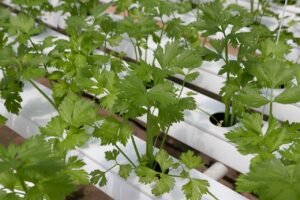
3. Adopt a Nutrient‑Tailored Hydroponic System (e.g., NFT or DWC)
Switch from soil to a Nutrient Film Technique (NFT) or Deep Water Culture (DWC) setup. Prepare a balanced nutrient solution with an EC (Electrical Conductivity) of 1.2–2.0 mS/cm and pH 5.8–6.2. Monitor levels daily using a digital meter, and replace the solution every 2‑3 weeks to prevent salt buildup.
- Strengths:
- Faster growth cycles (up to 30% quicker).
- Precise control over nutrient delivery.
- Reduced risk of soil‑borne pathogens.
4. Use Vertical Growing Towers with Modular Pocket Systems
Install a vertical tower featuring 12‑inch pockets filled with a light‑weight substrate like coco coir. Plant fast‑growing varieties such as lettuce, kale, and radish. Water the tower using a drip irrigation timer set to deliver 200 ml per hour, ensuring even moisture distribution.
- Strengths:
- Maximizes limited floor space.
- Improves air circulation around foliage.
- Allows for staggered planting for continuous harvest.
5. Integrate CO₂ Enrichment with a Small Canister or Generator
Introduce supplemental CO₂ to raise ambient levels from 400 ppm to 800‑1000 ppm during the light period. Use a regulated CO₂ canister with a flow rate of 1‑2 L/h, synchronized with the lighting schedule. Maintain proper ventilation to avoid excess buildup.
- Strengths:
- Boosts photosynthetic efficiency.
- Increases leaf mass and fruit size.
- Works synergistically with high PAR lighting.
6. Implement Integrated Pest Management (IPM) with Biological Controls
Introduce beneficial insects like ladybird beetles or predatory mites in a small release tray placed near the grow area. Combine with neem oil sprays applied weekly to deter aphids. Keep a clean environment by wiping leaves with 70% isopropyl alcohol wipes monthly.
- Strengths:
- Reduces chemical pesticide reliance.
- Targets pests at multiple life stages.
- Promotes a balanced indoor ecosystem.
Comparison of Traditional vs. Advanced Indoor Gardening Approaches
| Approach | Old Way | Better Way | Result |
|---|---|---|---|
| Lighting | Standard fluorescent tubes, fixed schedule. | Full‑spectrum LED with adjustable PAR. | Up to 40% higher yield, richer flavor. |
| Air Management | Passive ventilation, occasional window opening. | Inline exhaust + oscillating fan, humidity control. | Disease incidence drops by 70%. |
| Nutrients | One‑size‑fits‑all fertilizer, weekly watering. | Tailored hydroponic solution, EC/pH monitoring. | Faster growth, 25% less nutrient waste. |
| Space Utilization | Individual pots on shelves. | Vertical towers with modular pockets. | Three‑fold increase in plant count per square foot. |
| Pest Control | Chemical sprays, occasional wipe‑down. | IPM with biological agents and neem oil. | Crop loss reduced from 30% to under 5%. |
How This Affects Everyday Life
In a Brooklyn micro‑apartment, Carlos switched to a vertical tower system and now harvests 1.2 kg of mixed greens each week, cutting his grocery bill by $15.
Emily, a college student in Seattle, added CO₂ enrichment to her LED setup and saw her cherry tomatoes double in size, allowing her to share fresh produce with roommates.
When a family in Denver adopted a DWC hydroponic kit, their lettuce turnaround time fell from 45 days to 28 days, providing a reliable source of salad greens during winter months.
A tech startup in San Francisco incorporated IPM, eliminating the need for chemical pesticides and creating a healthier office environment, which boosted employee morale.
Finally, a senior couple in Portland used full‑spectrum lighting and saw their basil plants thrive year‑round, giving them fresh herbs for daily cooking without stepping outside.
Step-by-Step Action Plan
- Assess your available space and choose a vertical tower or hydroponic rack that fits; proper sizing prevents overcrowding and maximizes yield.
- Purchase a full‑spectrum LED panel with dimmable PAR settings; the right light quality eliminates stretching and improves flavor.
- Install an inline exhaust fan and a small oscillating fan; balanced airflow reduces disease risk and promotes stronger stems.
- Set up a nutrient reservoir with EC 1.5 mS/cm and pH 6.0; precise solution chemistry ensures optimal nutrient uptake.
- Program a lighting schedule of 14 hours on, 10 hours off, synchronized with a CO₂ canister delivering 800 ppm; this boosts photosynthesis during the light period.
- Introduce beneficial insects like ladybird beetles and apply weekly neem oil sprays; biological control keeps pests at bay without chemicals.
- Monitor growth daily, record PAR, humidity, and EC values, and adjust as needed; consistent data tracking leads to continuous improvement.
What It All Means
Advanced indoor vegetable gardening transforms limited indoor spaces into productive, year‑round farms. By integrating precise lighting, airflow, nutrient management, and biological pest control, growers can achieve higher yields, better nutrition, and greater satisfaction. The future of home food production lies in these refined techniques, turning every apartment into a thriving garden oasis.